
At the Four State Trucks facility in Joplin, Missouri, the team at Chrome Shop Mafia recently rolled one of their first Peterbilt 589s into the shop — and it’s already turning heads.
The big question surrounding the industry right now:
Can the 589 be as user-friendly and as cool as the legendary 389?
After spending time in the shop during the early stages of this flat roof build, here are 10 key takeaways from the project so far.
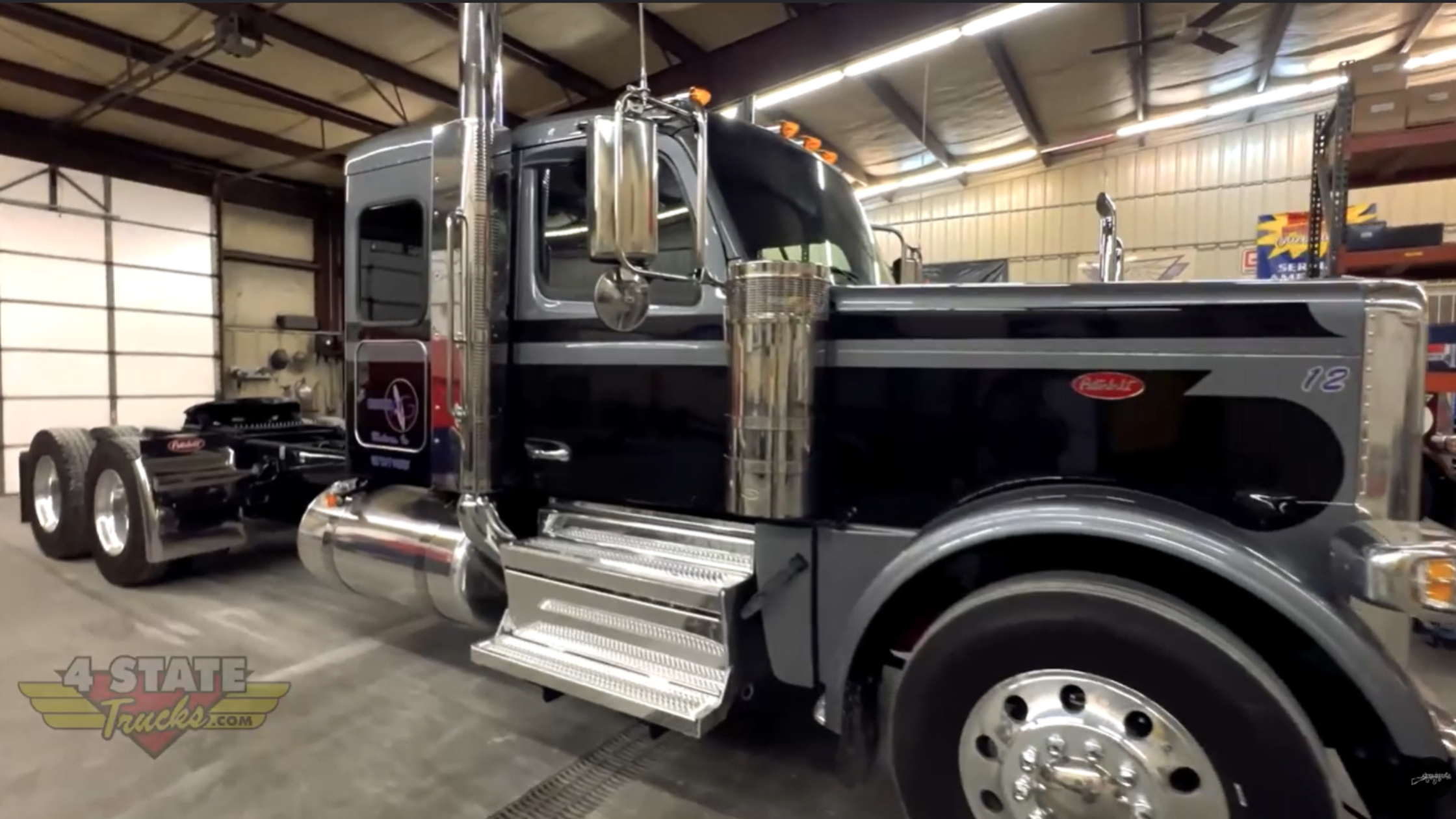
The flat top Peterbilt 589 arrives at Chrome Shop Mafia ready for its first round of custom upgrades, including a redesigned visor, exhaust system, and stainless panels.
When the 589 first debuted, reactions were mixed. It’s not a 389 — and in trucking, tradition runs deep.
But sentiment appears to be shifting. With more 589s hitting the road and appearing at major events, resistance seems to be softening as drivers begin to see its customization potential.
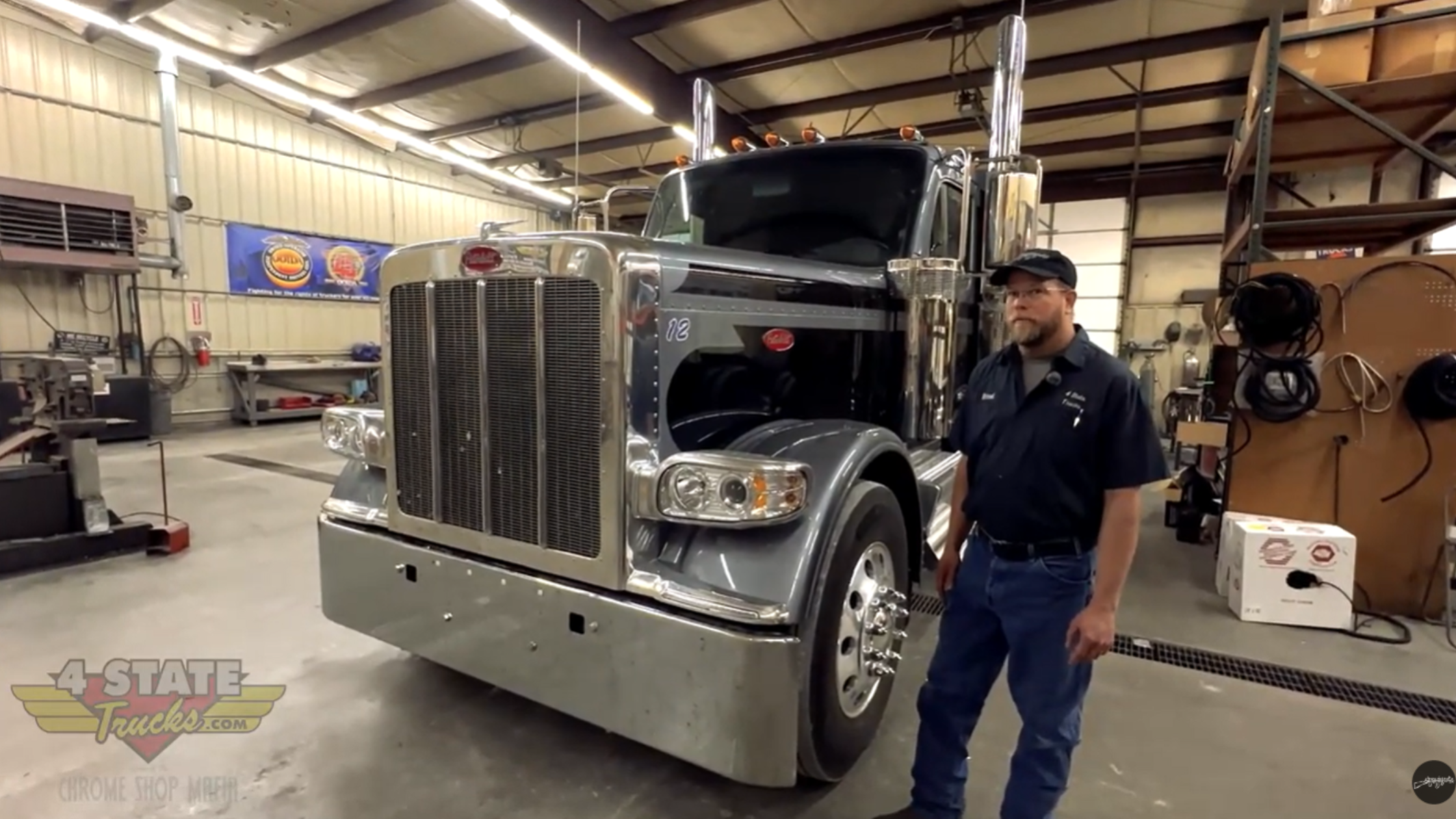
A closer look at the front of the Peterbilt 589 before upgrades begin. From the factory bumper to the grille and exhaust, this build is about to undergo a full custom transformation.
With the 389 no longer in production, the 589 represents the next chapter for show-quality and owner-operator builds.
Shops across the country — including Chrome Shop Mafia — are investing time and engineering into learning the platform because this is what they’ll be building on for years to come.
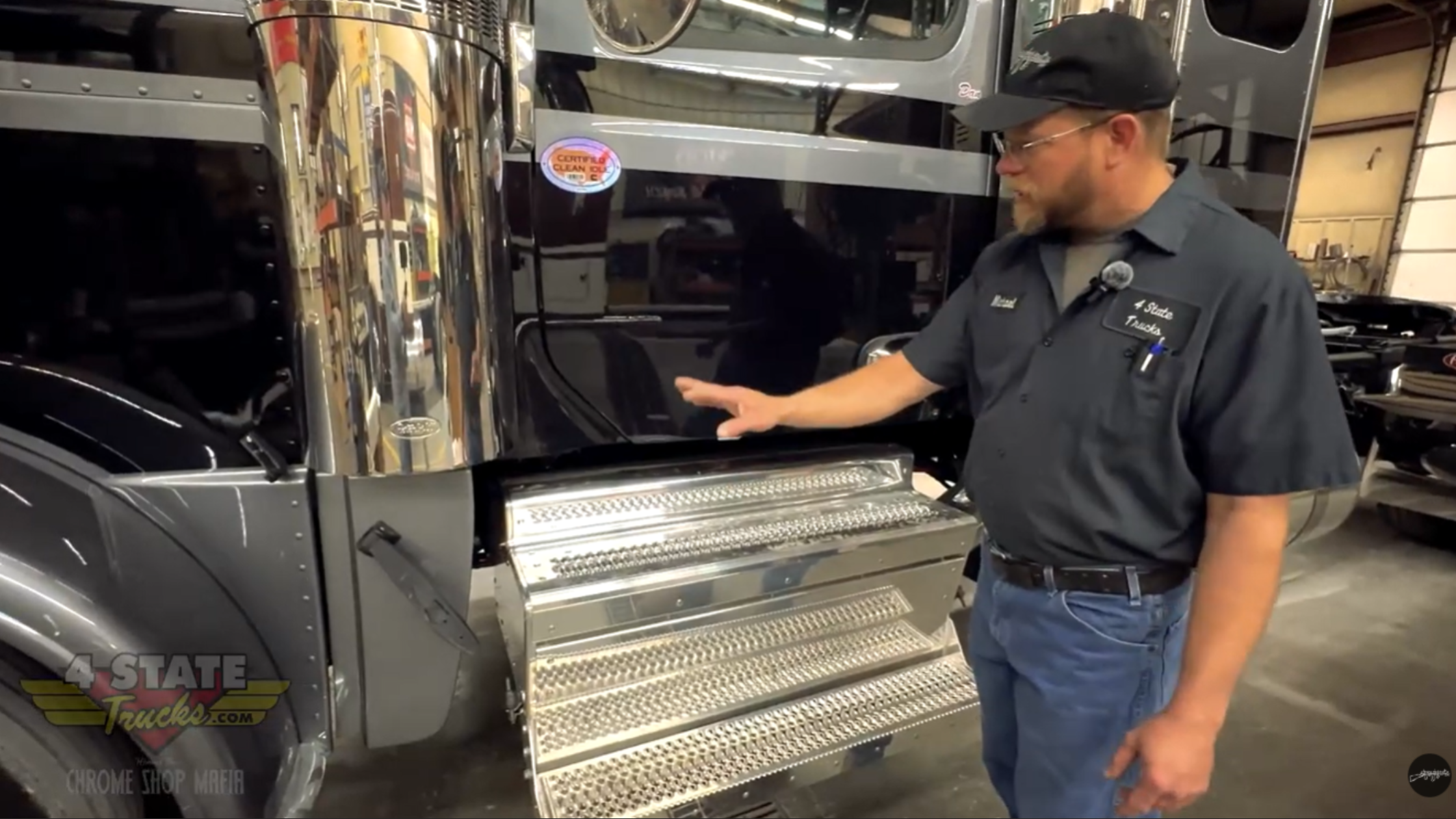
Evaluating the air cleaner and step area on the 589 before designing custom stainless panels and integrated lighting. The modern cab layout means new mounting solutions and fresh engineering.
This particular truck features a traditional flat roof cab, which presents unique design considerations.
Unlike the Ultra Cab version (for which aftermarket visor options are already available), the flat top requires entirely new measurements, templates, and bracket systems. Nothing transfers directly from previous generations.
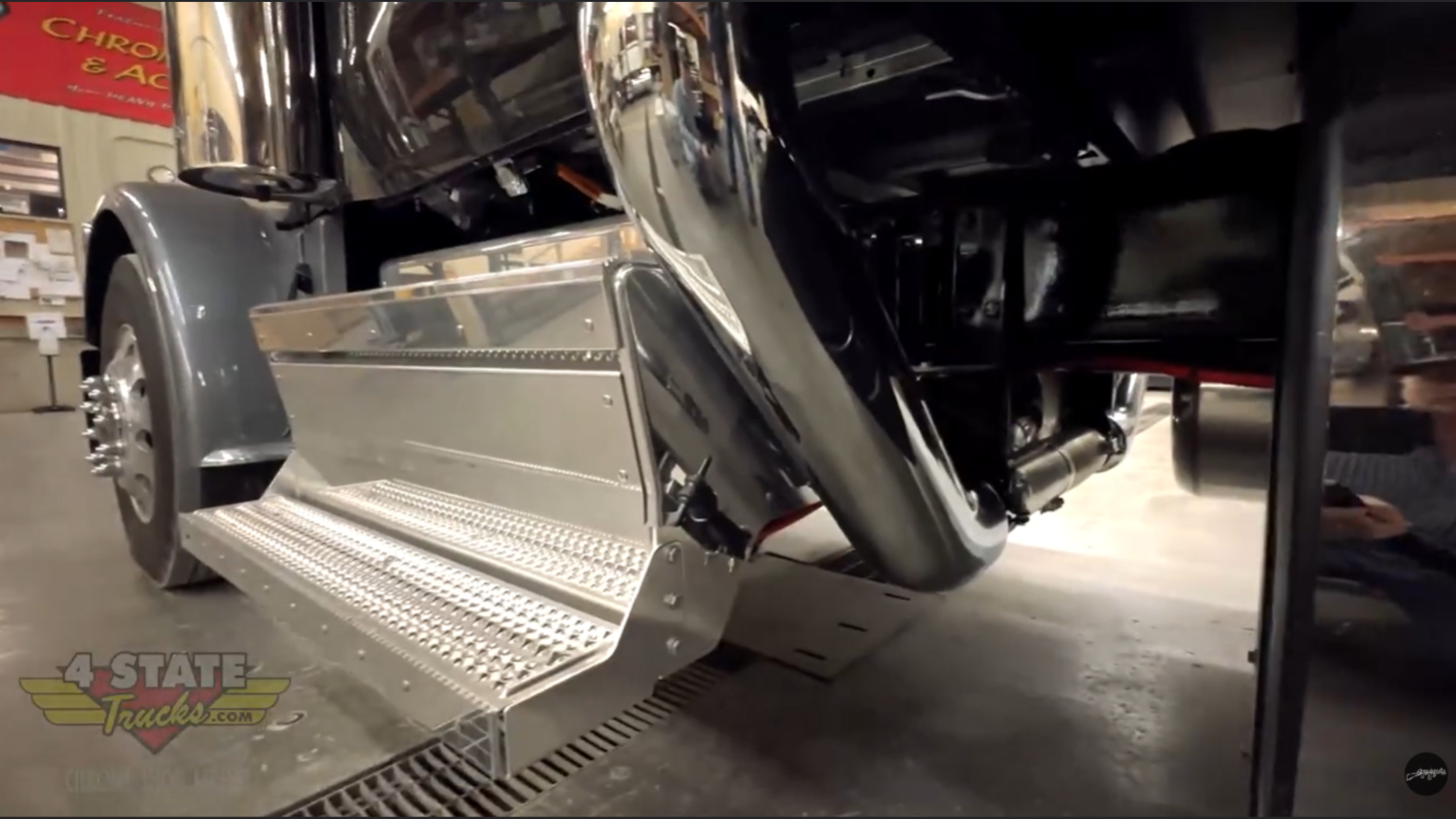
A closer look at the lower step and cab mounting area highlights the 589’s curved body design — one of the key challenges when fabricating custom stainless panels and trim.
One of the biggest differences between the 589 and the 389 is panel geometry.
The 589 features:
More curvature
Fewer flat panels
More integrated body lines
For aftermarket designers accustomed to straight stainless panels, this shift demands additional engineering and creative problem-solving.
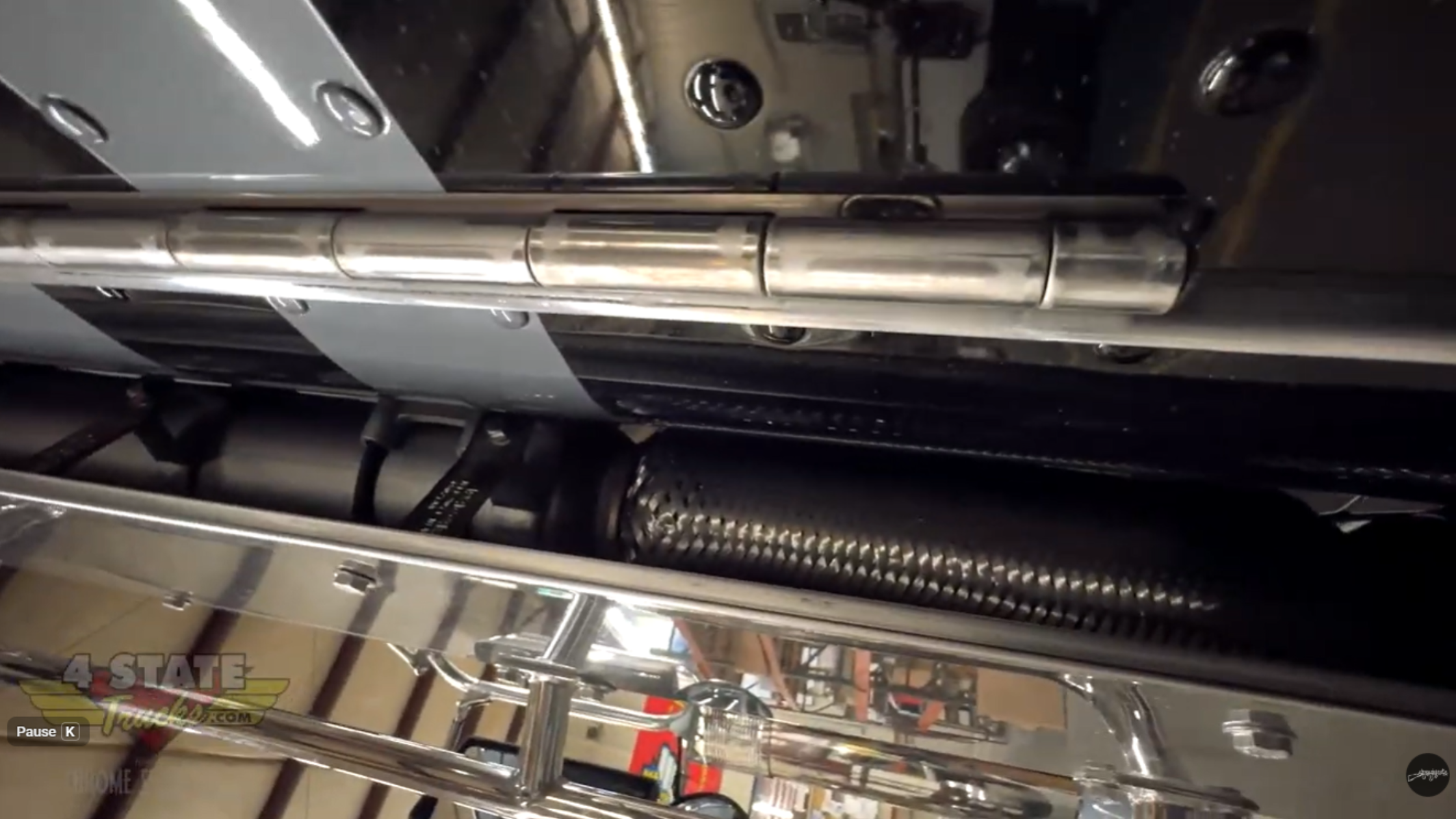
A look behind the shield reveals the 589’s factory flex pipe setup — designed to allow cab movement, but requiring re-engineering for a clean straight-pipe custom exhaust system.
The exhaust setup on the 589 differs significantly from earlier models.
The system includes:
A roughly 7-inch elbow
Reduced pipe diameter sections
A flex (bellow-style) section hidden behind the shield
Multiple mounting points — some attached to the frame, others to the cab
This configuration allows for cab movement on air ride systems, but it complicates clean aftermarket pipe installations.
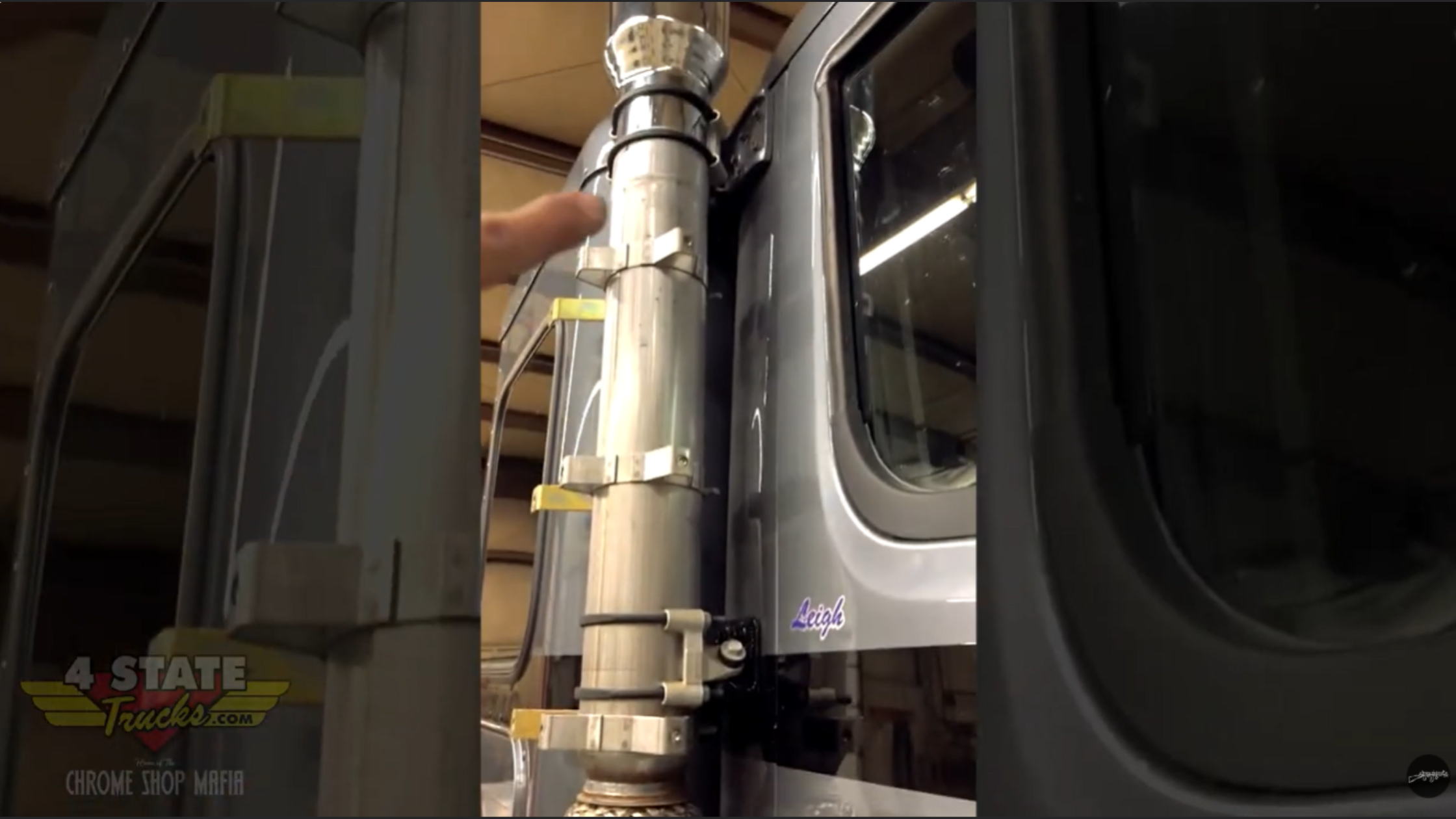
The 589’s factory exhaust stack features multiple clamp points and a cab-mounted upper section — a setup that requires careful redesign when converting to long drop custom pipes.
To achieve the straight-pipe aesthetic many owner-operators prefer, the factory system must be redesigned.
That includes:
Removing the flex section
Reworking mounting points
Installing long drop 7-inch pipes
Eliminating excess shielding
It’s not a simple bolt-on swap — it’s a custom engineering project.
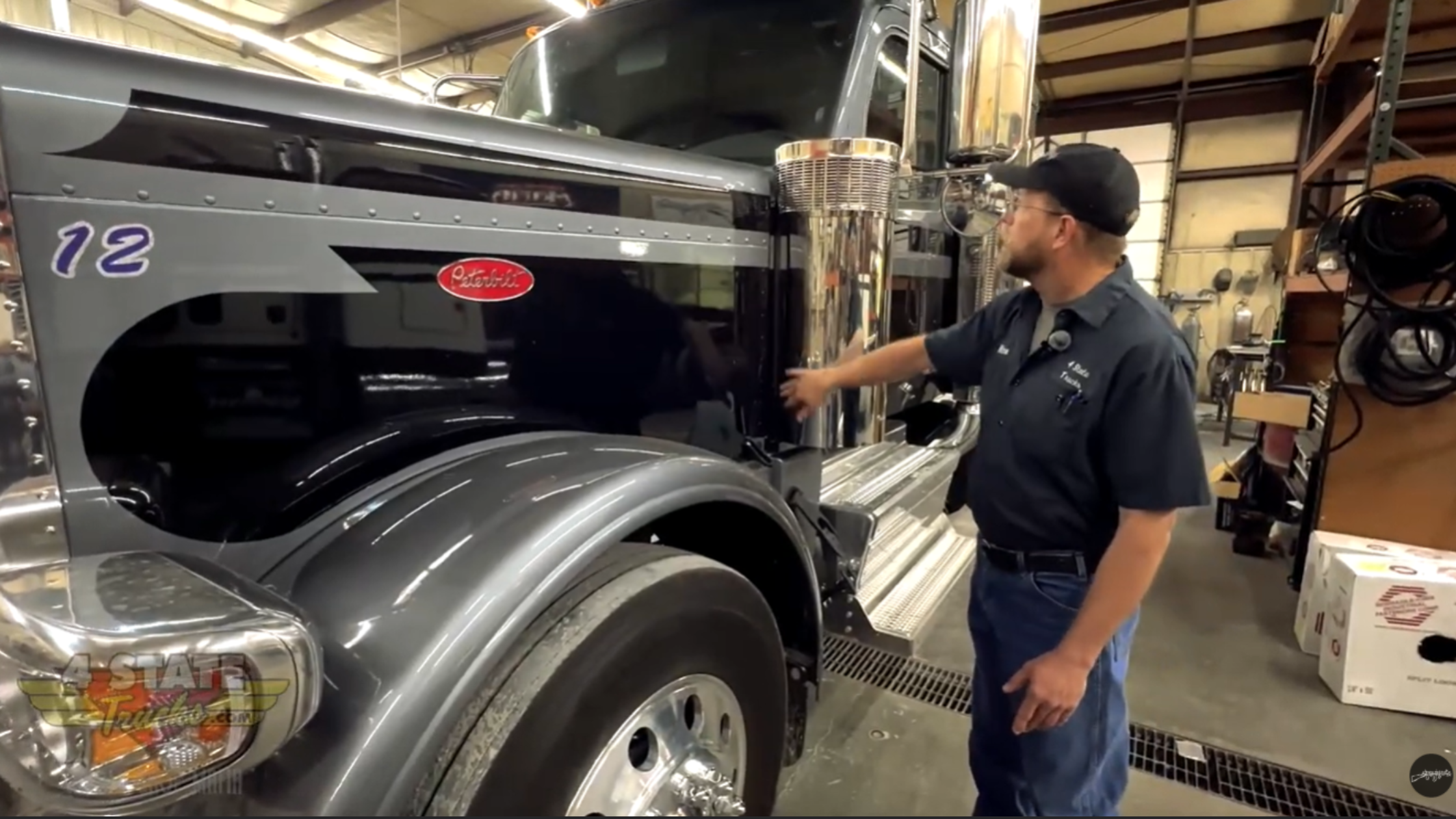
A closer look at the 589’s factory air breather setup. The updated mounting design and clamp system mean custom panels and lighting will require new engineering solutions.
Unlike previous models, the 589 lacks traditional strap and bracket setups for easy air cleaner panel installation.
To add stainless panels with integrated lighting, the team must develop entirely new mounting systems — another example of how the 589 platform requires fresh thinking.
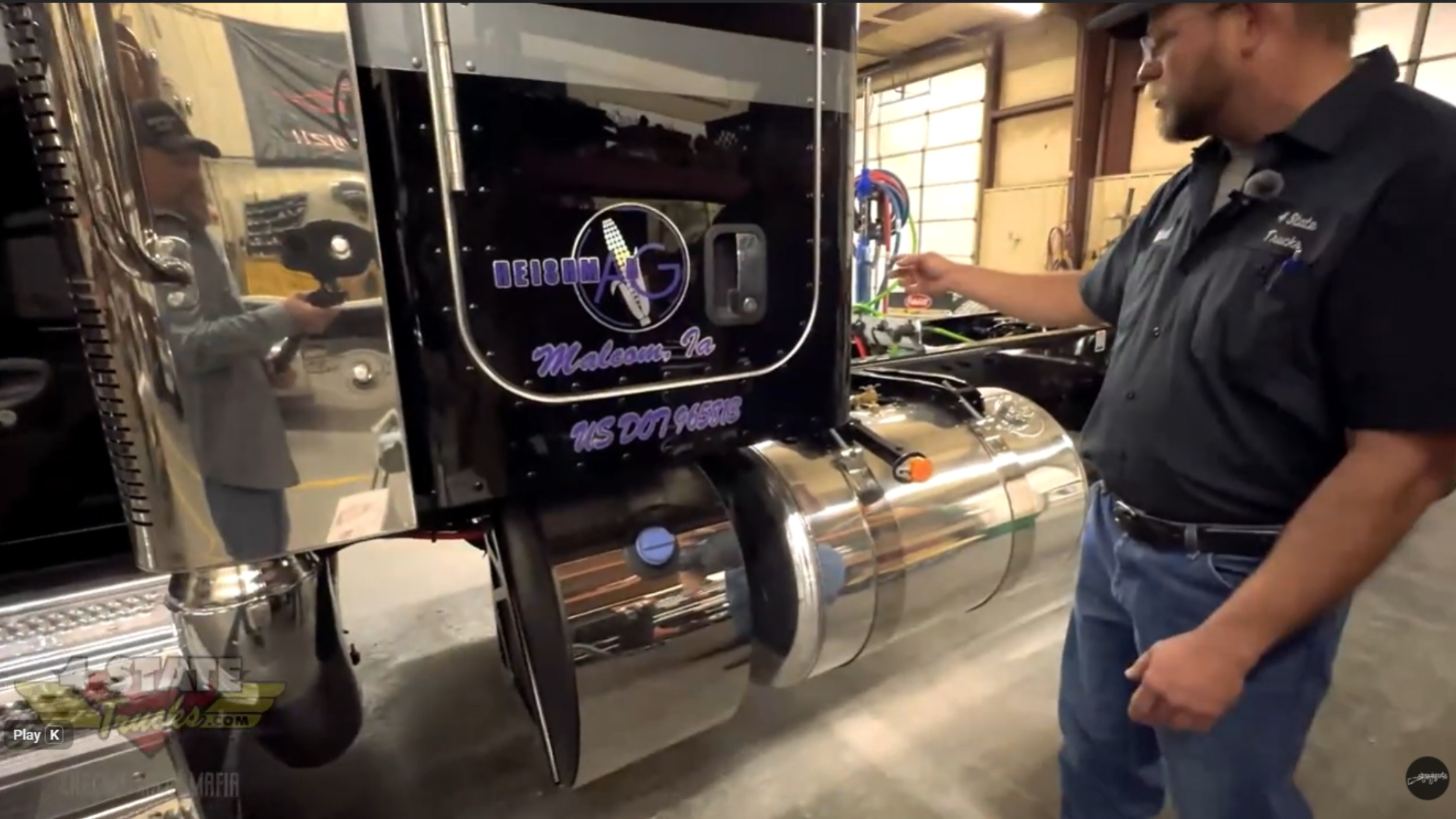
The factory fuel tank and sleeper panel layout on the 589. Plans include balancing the tank sizes visually and adding stainless sleeper panels for a cleaner, more symmetrical look.
From the factory, this truck came with:
A 120-gallon tank on one side
A 90-gallon tank and DEF tank on the other
To achieve a balanced appearance, plans include repositioning components and covering the DEF tank to create visual symmetry — a key detail in high-end builds.
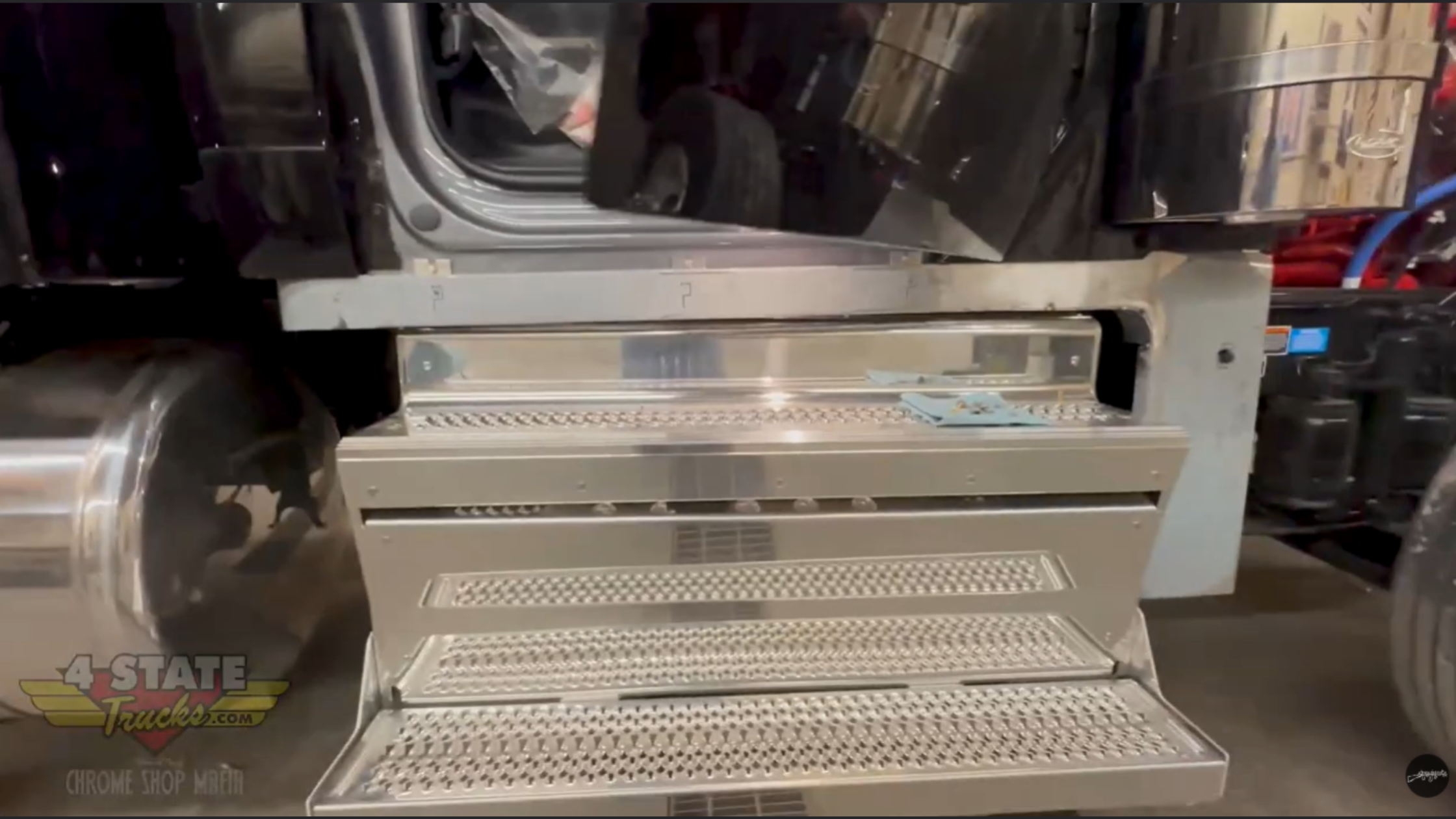
The factory step assembly on the 589. Clean from the start — but ready for stainless upgrades and integrated lighting to match the rest of the build.
Additional upgrades planned include:
Cab and cowl skirts
Sleeper panels
Integrated lighting
Stainless finishes
While the final parts list is still evolving, it’s clear this 589 will receive a full visual transformation.
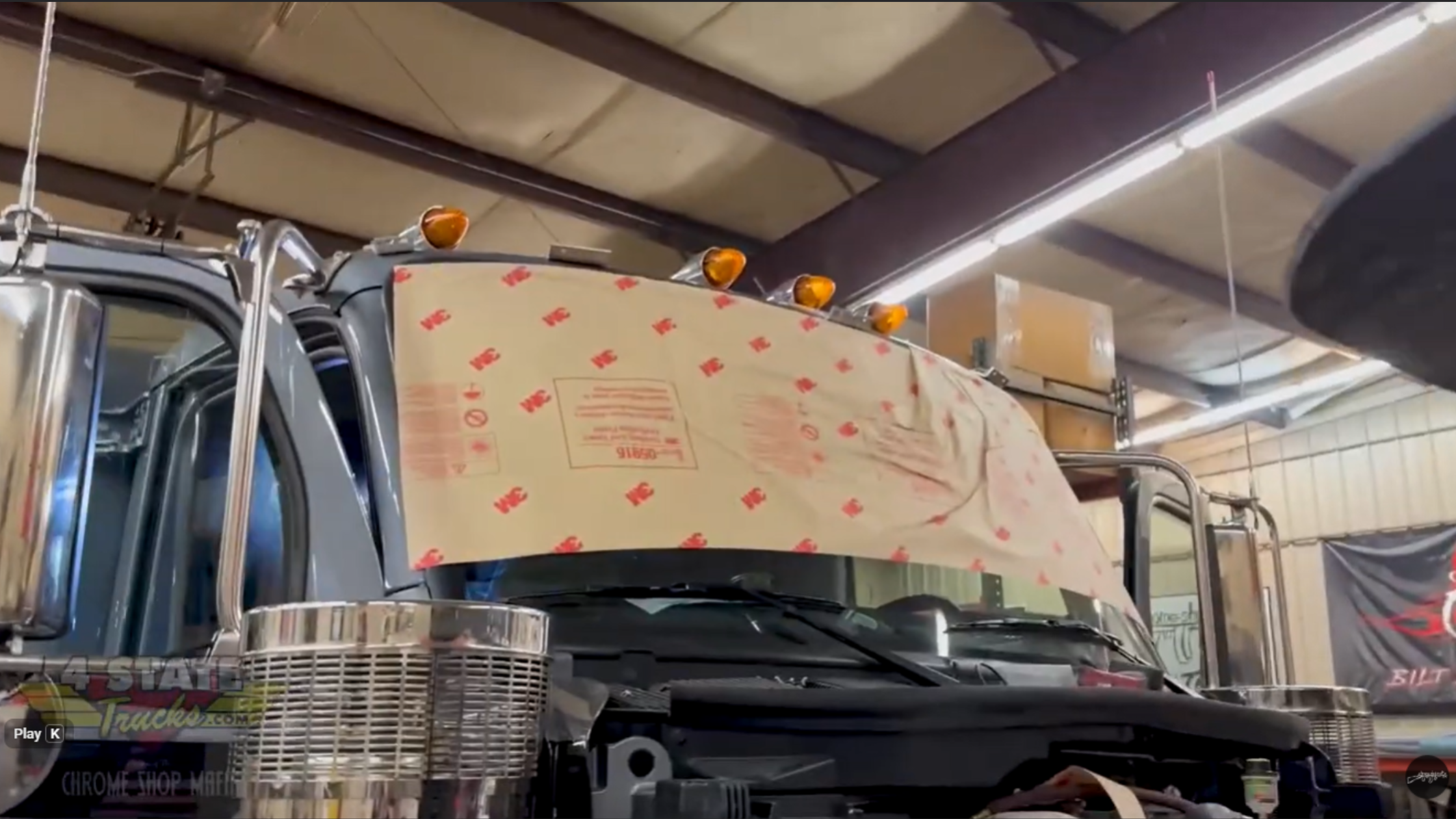
New visor brackets mocked into place on the flat top 589. Because this roofline is different from the Ultra Cab, a custom bracket system is required before the final visor can be installed.
One early example: installing visor brackets required removing the headliner.
Access to mounting points was far more involved than expected, reinforcing a broader theme of the 589 build — what looks straightforward often requires deeper disassembly and creative solutions.
The 589 isn’t a 389 — and it wasn’t meant to be.
It represents a more modern take on the traditional long-nose platform. While it introduces new engineering challenges for aftermarket shops, it also opens the door to new design possibilities.
If this first build in Joplin is any indication, the 589 may not just replace the 389 — it may define the next era of custom trucking.
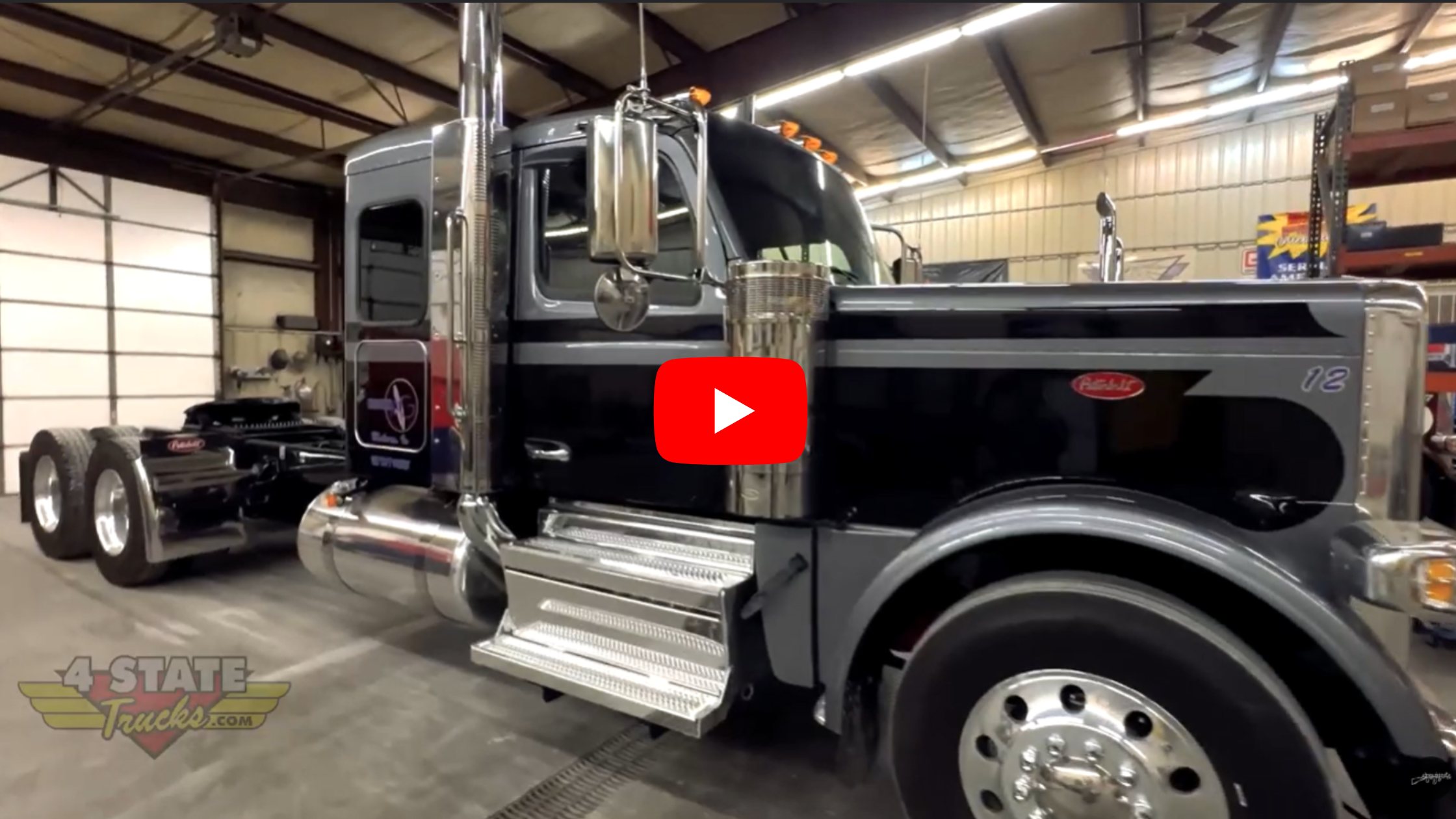
Watch Vol. 1 of the Peterbilt 589 build to see the first round of modifications — from exhaust tear-down to custom visor bracket fabrication — now live on YouTube.